
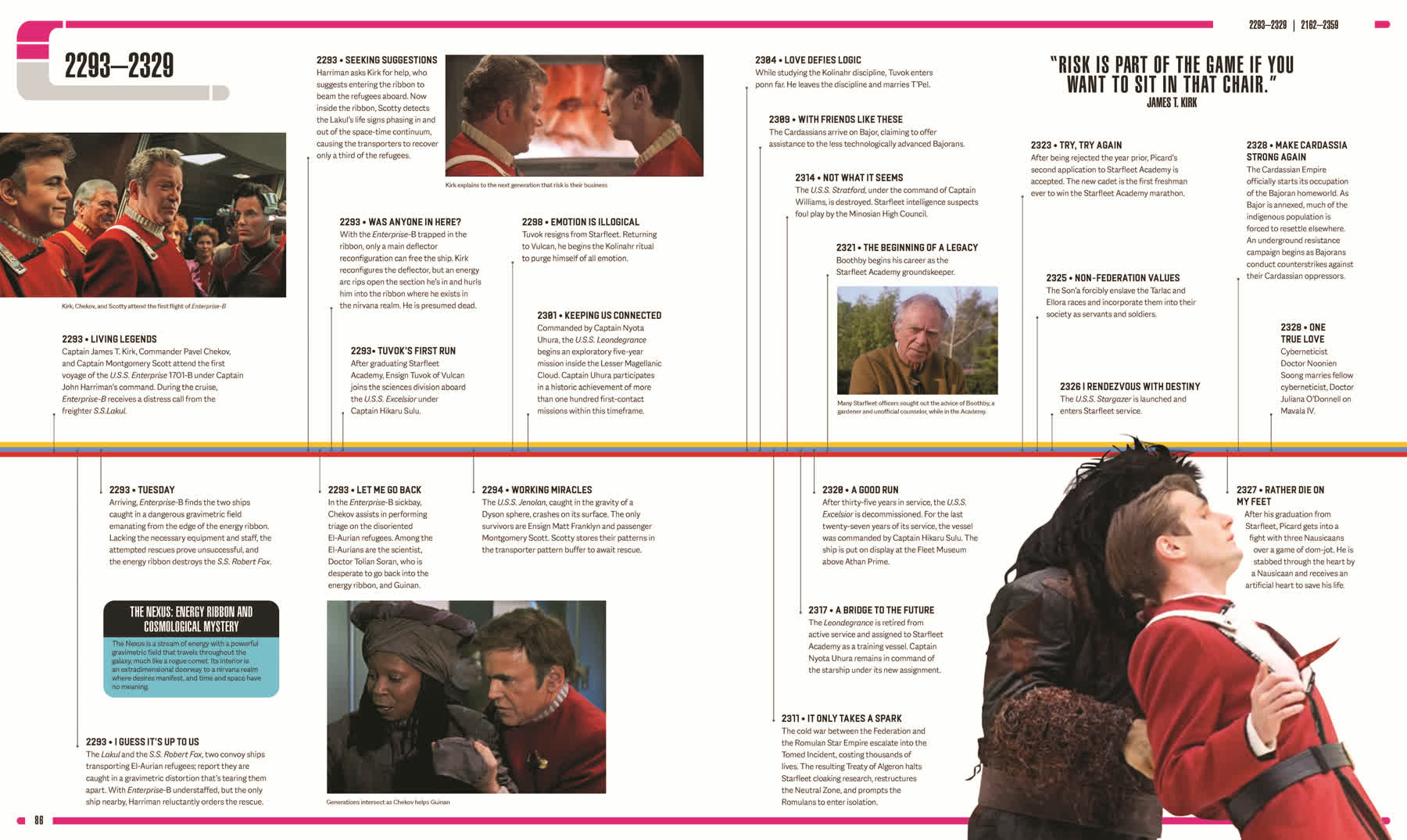
For roughly twenty years, I carried around a pocketful of unanswered Star Trek questions. When was Khan Noonien Singh born? When did the Eugenics Wars actually happen? When did World War III really start? Fans have argued about questions like these for as long as I have been going to conventions, and for most of that time the honest answer was a shrug and a “depends on which episode you ask.”
Working on Star Trek Timelines changed that for me. Those questions got discussed among the four of us writing the book, sent off to DK, forwarded to Paramount, and settled in print. I have been wondering about some of them for twenty years, and now they sit on the page with dates attached. That alone would have made the project worth doing.
But here is the thing I keep coming back to as a gamer: this book may be even more useful at your gaming table than it is on your reference shelf. Specifically, it can run your session zero. Let me walk through how my co-authors and I talked about using it on Continuing Conversations, because I think the method can help most Star Trek Adventures groups get a campaign off to a stronger start.

Start with the Book on the Table
Jim Johnson put it simply on the show: “Have a copy of this with you at session zero and say, okay, we’re going to do a Star Trek game. Players, what kind of campaign do you want? When in the timeline do you want this thing set?”
That is the whole idea. Instead of the game master arriving with a campaign already decided and hoping the players buy in, session zero becomes a group flip through six decades of Star Trek history. The book gives the conversation something concrete to react to. Most groups, in my experience, have an easier time choosing between real options than inventing one from a blank page.
Step One: Pick an Era
Start wide. The timeline is organized so that each era gets its own stretch of pages. As Jim described it, if your group picks the movie era, “here’s 30 pages. Here’s all this stuff that happened in the movie era.”
So flip together and watch where the table lights up. Does the group lean toward the five-year mission era? The Dominion War? The era of Star Trek: Discovery‘s far future? The choice matters more than it might seem, because the era quietly decides a lot of other things for you: the kind of ship that makes sense, the uniforms, the politics your crew will bump up against, and the general tone of the stories you can tell. Picking the era as a group means those downstream choices start with buy-in already built in.

Step Two: Find the Quiet Corners
Once you have an era, resist the urge to park your campaign on top of its most famous events. Instead, look for the thin spots.
Jim again: “If you look at the sections that are kind of lean that canon hasn’t really touched yet, and say, okay, we want to do a lost era campaign. Here’s what we know happened. And now let’s start filling in the blanks.”
The stretches between the big events — the years after one series ends and before another begins, the sectors that got a mention and not much else — are where a campaign can breathe. You get the shape of the galaxy from canon, and you get room to invent inside it. Your crew can matter there in a way that can be harder to manage when a famous starship is scheduled to handle the crisis next Tuesday.
Step Three: Decide Your Distance from Canon
This is the conversation some groups skip and later wish they hadn’t. How close do you want to fly to canon events?
As I said on the show, some players don’t want to play canon because it can feel like too much: “So now you could look and say, we’re not gonna touch any of this. So I’m gonna put us on this side of the galaxy.” That is a perfectly good answer. So is the opposite. A group might love shadowing a famous storyline from one sector over, hearing about events at a distance.
And keep in mind that when you play, you are building your own version of events anyway. Jim’s way of putting it was that a group can follow canon up to a particular page in the book and then ignore everything after it: “We’re gonna make our own thing now.” Whichever distance your group chooses, choosing it out loud at session zero tends to save a lot of mid-campaign friction.

Step Four: Let the Players Choose
None of these steps works as a lecture. The point of doing this at session zero, rather than in the game master’s notebook the week before, is that the players get a genuine say in the kind of game they are signing up for. Ask, listen, and let the group argue a little. That argument is useful data about what your players actually want.
One bonus use while the book is open: character backstories. Derek Tyler Attico suggested working out how old a character was when a given event on the timeline happened. What was your science officer doing during the Dominion War? Was she a child when a particular first contact went sideways? Those anchored details can give a character a lived-in feel before the first mission even starts.
Out Tomorrow
Star Trek Timelines goes on sale tomorrow, November 24, from DK. I co-wrote it with Jim Johnson, Derek Tyler Attico, and Kelli Fitzpatrick, and all four of us are gamers, so it probably won’t surprise regular readers that we kept asking how people might play with it. If your group tries the session-zero approach, I would genuinely love to hear which era you picked — and which quiet corner you decided to call home.
Leave a Reply