
By Mark Meredith
Within this alternate reality set in motion by the “Tapestry” concept, the chain of events that once sent the USS Voyager hurtling across the galaxy never occurs. In the familiar storyline, Voyager’s mission to track a renegade Maquis crew led to an unexpected detour, stranding the ship in the Delta Quadrant and forging a legendary seven-year journey home. Here, that initial pursuit never happens because the Maquis threat does not escalate in the same way. Without the pressures and incidents that defined the Federation’s shifting priorities, Voyager might never find itself caught in the Caretaker’s array.
No Journey to the Delta Quadrant
Without the battle of Wolf 359 and subsequent cascading effects, the Federation’s stance towards the Maquis is less reactionary. With tensions managed differently—perhaps through quieter diplomacy or early concessions—the crisis prompting Voyager’s mission into the Badlands may never emerge. Captain Janeway and her crew remain in the Alpha Quadrant, serving as one ship among many, rather than the intrepid pathfinders lost so far from home. Player characters in a campaign set in this reality might join Voyager on standard patrols, methodical surveys, and scientific assignments closer to known territories, without the epic struggle to return across 70,000 light years of unexplored space.
Alternate Roles for the Crew

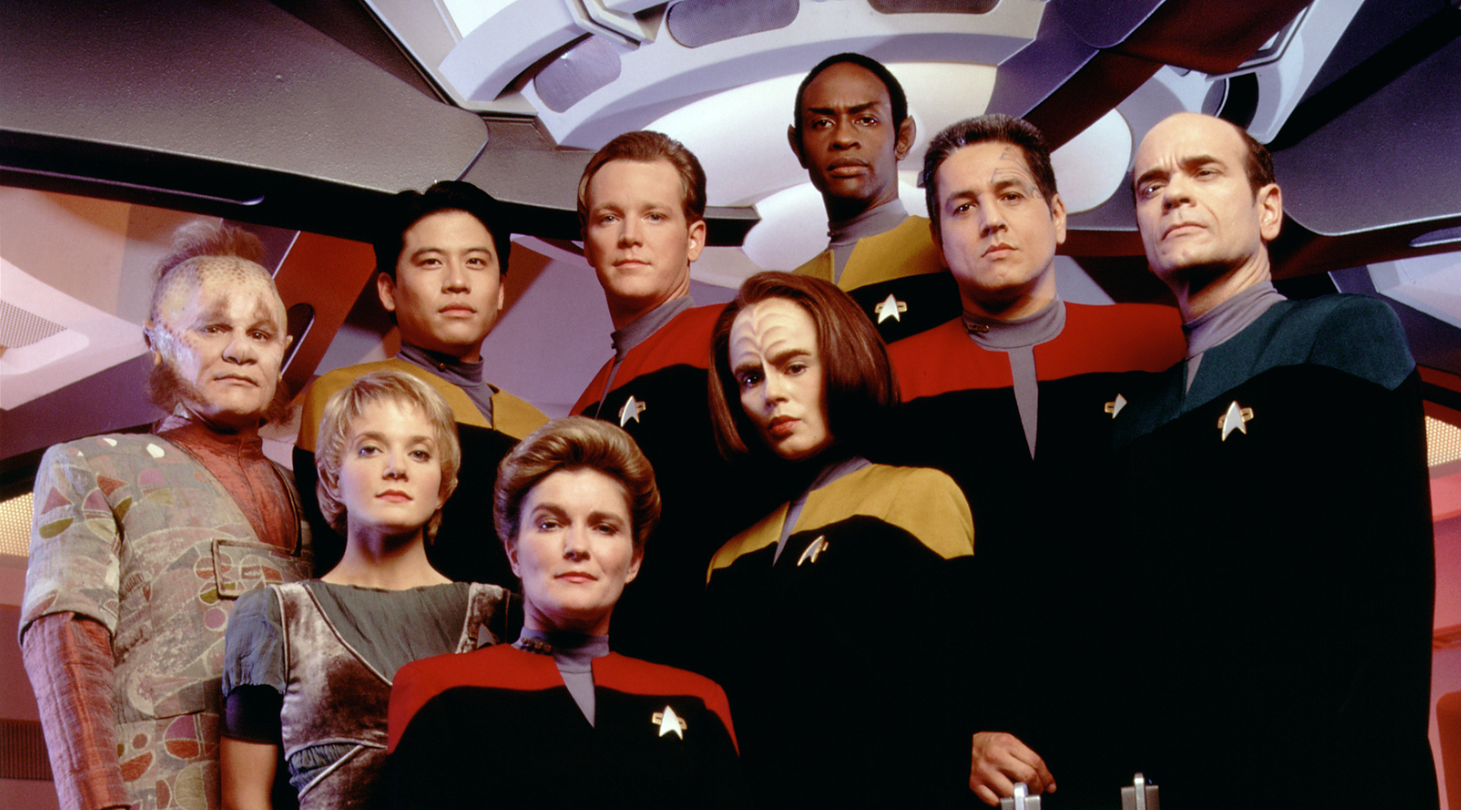
In the original timeline, Voyager’s journey creates circumstances for each crew member’s growth. Without that crucible, their arcs follow more conventional paths. Captain Janeway, known for resourcefulness and moral resolve tested by isolation, might instead be seen as a competent officer respected for steady leadership at Starfleet’s core. Chakotay, no longer forced into an uneasy truce with Starfleet following his Maquis rebellion, might never leave the Federation in the first place, returning to duty as a valued officer rather than a reluctant ally. B’Elanna Torres, still an exceptional engineer, may not gain the same personal insights she found in the Delta Quadrant. The unity formed aboard Voyager, blending Starfleet and Maquis crews, never forms. Instead, that potential remains untapped talent scattered across different postings.
Tom Paris, never offered the chance at redemption by Janeway, could remain an outcast in a penal colony or be offered a quiet reassignment—one that lacks the grandeur of redeeming himself in a far-flung corner of the galaxy. Without Voyager’s odyssey, the Emergency Medical Hologram might never evolve beyond its programmed limits, remaining a standard-issue tool rather than a distinctive individual. Harry Kim’s experiences, once accelerated by life-altering challenges in the Delta Quadrant, might instead reflect the slow, steady advancement common to many junior officers. No Kes or Neelix enters the picture to add their cultural insights, and the Borg remain a distant whisper. Seven of Nine never comes aboard, so no humanized voice emerges from the Collective’s ranks.
No Familiar Delta Quadrant Races or Alliances

Without the Caretaker’s displacement wave, Voyager never encounters the Kazon, the Vidiians, the Hirogen, or any of the countless species that tested their ingenuity. The Federation of this timeline remains largely ignorant of threats and wonders lurking in the Delta Quadrant. No advanced technologies are gleaned from these distant corners. No uneasy truces or tentative friendships form. The Federation’s outlook retains a more local perspective, and without Voyager’s influence, the future might be more predictable, though less prepared for unforeseen challenges.
Effects on Federation Preparedness

In the known timeline, Voyager’s journey reshaped Starfleet’s knowledge of the galaxy’s dangers. Battles with the Borg, alliances with Species 8472, and hard-won insights into advanced propulsion and defensive measures influenced Federation strategy. Without these lessons, the Federation does not adapt its approaches to future threats as quickly. Player characters might face a Federation more cautious, less informed, and possibly more inclined to turn inward. Adventures could center on discovering new frontiers much closer to home, where any surprise could be met with less flexibility and fewer creative tactics. The brilliance forged in adversity remains absent.
Player Opportunities in a Familiar Galaxy
For those running STA campaigns, this Voyager scenario creates a subtle stage. Instead of portraying the struggles of a crew far from home, you can explore the quiet turning points that define the Federation’s path. Voyager’s officers and crew might pop up as guest NPCs stationed at starbases or posted to routine missions. Characters that were once shaped by hardship and unconventional allies remain professionals shaped by academy training and well-established protocols. Your players could discover what it means to stand out in a Federation untouched by the extraordinary ordeal Voyager endured.
Another alternative storyline is the PC’s ship finding itself taken by the Caretaker and brought to the Delta Quadrant, living out their own adventure in the place of Voyager.
In this alternate reality, the sky feels calmer, but it also lacks many of the personal transformations that defined Voyager’s legacy. Player characters must choose how to fill the void. They may become explorers breaking new ground in safer territories, diplomats forging alliances that never came about, or scientists working on projects that once took a backseat to survival. The Voyager era here is one of roads not taken, where the ship that once defined resilience remains another capable vessel operating in Starfleet’s familiar heartland.
Tying It All Together
This final piece of the “Tapestry” timeline puzzle paints a Federation and Starfleet missing the grand feats of heroism that once knitted together diverse crews and cultures. Just as with the TNG and DS9 aspects of this alternate universe, the Voyager storyline invites reconsideration of what made these crews remarkable. Without the Delta Quadrant voyage, the characters, challenges, and breakthroughs that reshaped Starfleet’s future are replaced by a quieter, more stable galaxy. Into this stillness step your player characters, free to chart new destinies, confront unexpected crises, and create the legacies that might have otherwise belonged to Voyager’s legendary voyage.
TM & © 2026 CBS Studios Inc. © 2026 Paramount Pictures Corp. STAR TREK and related marks and logos are trademarks of CBS Studios Inc. All Rights Reserved.


Leave a Reply to Mark TempleCancel reply