
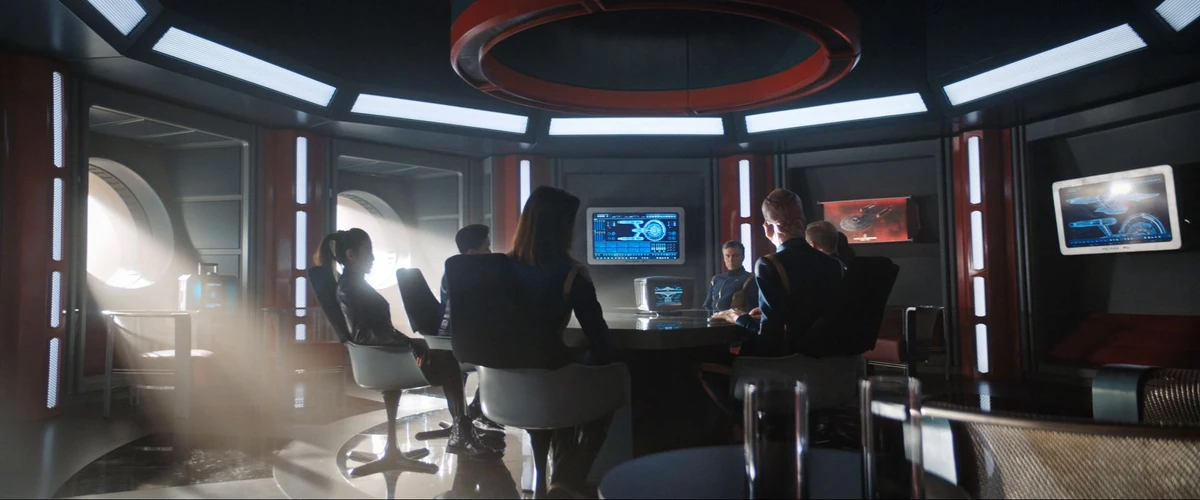
A good mission briefing is one of the most useful tools a Star Trek Adventures GM has. It gives the players direction, establishes the tone of the episode, and lets everyone settle into the rhythm of Star Trek before the first roll is ever made.
The mistake is treating the briefing like a lore dump. Players don’t need a full history of the sector, three pages of political context, and every possible complication before the mission begins. They need enough information to understand why they are here, what Starfleet wants, what is at stake, and what questions remain unanswered.
A strong briefing should do four things.
First, it should establish the assignment. This is the basic order from Starfleet, the captain, the admiral, the colony governor, or whoever is sending the crew into trouble. “Investigate the loss of contact with Outpost K-17.” “Escort the Tellarite ambassador to a disputed mining world.” “Study a gravimetric anomaly near a pre-warp civilization.” Keep it clear. Players should know what their characters believe they are supposed to do.
Second, it should establish the stakes. Why does this matter? A missing outpost matters more if it monitors the Romulan border. A diplomatic escort matters more if peace talks could collapse. An anomaly matters more if it threatens a colony, a sacred site, or the secrecy of a hidden observation post. Stakes turn an errand into an episode.
Third, it should establish limits. This is where Star Trek gets interesting. Maybe the crew can’t violate the Prime Directive. Maybe they have orders not to provoke the Klingons. Maybe rescue operations are complicated by radiation, politics, or time. Limits create drama because they stop the players from solving every problem with the most obvious tool.
Fourth, it should leave space for discovery. The briefing shouldn’t explain the mystery. It should point the crew toward the mystery. Give them the known facts, then let the session reveal what those facts really mean.
A good briefing might sound like this:
“Three days ago, Federation listening post Calypso stopped transmitting. The station monitors subspace traffic along the edge of the Triangle, so Starfleet wants answers quickly and quietly. The nearest Klingon patrol route passes within two light-years, and Command has ordered us not to escalate. Our mission is to determine what happened, recover any survivors, and restore the station if possible.”
That gives the players a mission, stakes, limits, and unanswered questions. It also gives every department something to care about: Command has orders to interpret, security has possible hostile activity, engineering has a damaged station to restore, science has a communications mystery, medical may soon have casualties, conn has to get them there without drawing attention.
That last part matters. The briefing should invite the whole crew into the episode. If only the captain or science officer has anything meaningful to do, the mission may begin with half the table waiting for permission to participate.
You can fix that by adding department-facing questions. Ask the engineer what systems they want to prioritize on arrival. Ask the science officer what kind of scans they prepare. Ask security what precautions they recommend. Ask the doctor what emergency protocols sickbay activates. These questions turn the briefing from boxed text into play.
Mission briefings also give you a place to seed character drama. If a player has a Value about trusting Starfleet, give them orders that feel incomplete. If someone’s lifepath includes a mentor from the Diplomatic Corps, make that mentor part of the mission. If a character has history with Cardassians, Romulans, the Maquis, or a border colony, let the briefing put that history on the table.
The briefing doesn’t need to be long. In fact, shorter is usually better. Give the players a clear starting point, a reason to care, and enough pressure that the first decision matters.
The best mission briefings don’t tell the players what the episode is about, they tell the players why the episode can’t wait.

Leave a Reply