
There are few things more beautiful and more terrifying than a player who remembers the source material.
I learned this during a session of Star Trek Adventures when an enemy had taken control of Engineering. The setup seemed perfect. The ship was compromised. A dangerous opponent was dug into one of the most important sections of the vessel. I was ready for a tense confrontation full of security teams, emergency bulkheads, rerouted power, command decisions, and maybe a desperate fight around the warp core.
Then one of my players remembered “The Hunted.”
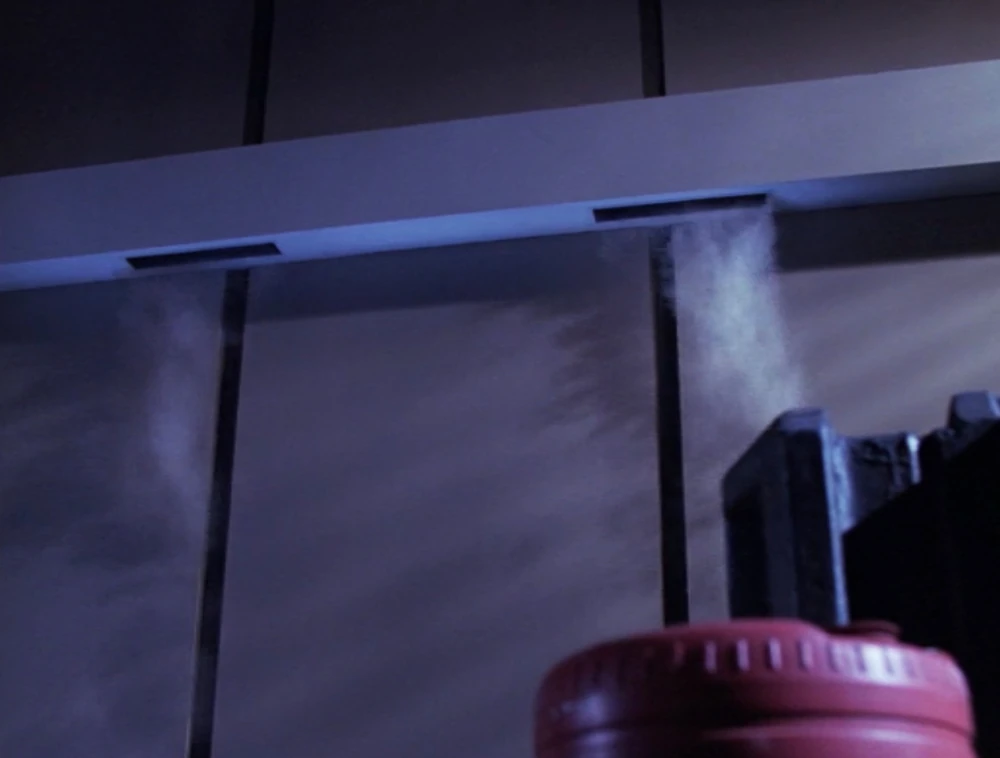
In that episode of Star Trek: The Next Generation, Picard has the cargo bays flooded with anesthizine while trying to subdue Roga Danar. It is a very Star Trek solution: use the ship itself, avoid unnecessary casualties, and turn technical knowledge into tactical advantage.
So my player asked the obvious question.
Could they flood Engineering with anesthizine?
I loved it.
That is exactly the kind of thinking I want in a Star Trek game. She was not looking at her sheet for the biggest attack. She was not waiting for the tactical officer to solve the scene with a phaser. She was thinking like someone aboard a starship. The Enterprise is not just a map full of rooms. A Federation starship is an environment full of systems, redundancies, safeguards, atmospherics, force fields, sensors, maintenance access, transporters, and emergency protocols. Using those systems creatively should be part of play.
So yes, it worked. The fight I had imagined never happened. The enemy lost control of the situation. The crew solved the problem with knowledge, memory, and quick thinking. As a GM, there is a small part of you that watches your carefully prepared confrontation evaporate and thinks, “Well, there goes that.” But there is a much larger part, or there should be, that thinks, “That was fantastic.”
Players should be rewarded for cleverness. Especially in Star Trek. But then comes the second part of the lesson: don’t let anesthizine become the answer to everything.
After the session, I had to tell her, with affection and only a little fear, that this could not become her solution every week. We could not have every hostile boarding action, mutiny, monster loose on Deck 12, and tense negotiation end with someone casually saying, “Can we just gas the room?”
That is where the GM has to draw a line without punishing the original idea.
The first time a player uses a clever canon-informed solution, let it shine. Let the table celebrate it. Let it change the outcome. Let it become one of those stories your group retells later.
After that, make the world respond logically.
Maybe anesthizine can’t be safely deployed in every section of the ship. Maybe Engineering has atmospheric safeguards that prevent a full flood while the warp core is active. Maybe there are crew members trapped inside. Maybe the enemy has environmental gear. In “The Hunted,” Danar uses a pressure suit to avoid the gas, so there is canon precedent for counterplay.
Maybe using it creates consequences. Sickbay fills up with unconscious engineers. A delicate system goes unmonitored for thirty seconds too long. The intruder falls, hits a console, and triggers a new problem. The solution still works, but it does not erase the episode.
That’s the balance.
You want to encourage players to think like Starfleet officers, not train them to avoid creative solutions because the GM gets defensive. But you also want each situation to have its own texture. A trick that works perfectly once should become part of the crew’s toolkit, not a universal skeleton key. That is the real lesson of anesthizine.
Let your players know the setting. Let them remember episodes. Let them use weird bits of canon to solve problems in ways you never expected. Those moments are gold. They make the game feel less like generic science fiction and more like Star Trek.
Just remember that once they discover they can flood the room with knockout gas, your job changes. Now you are not trying to stop them from being clever. You are trying to make sure they have to keep being clever.
Leave a Reply