
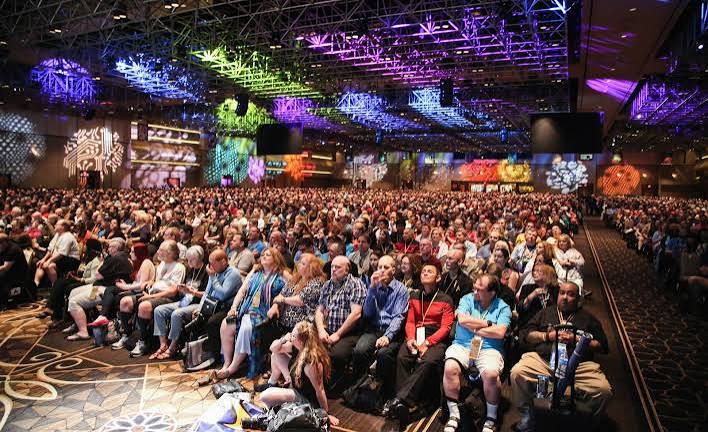
I’ve been thinking about something since Star Trek Las Vegas, and my co-host Jim Johnson and I got into it on a recent episode of Continuing Conversations: I’m starting to wonder if those of us who spend a lot of time online have a completely distorted idea of who Star Trek fans actually are.
And I mean completely distorted.
Because when you’re online, particularly in some of the Star Trek spaces, you would think everybody is angry about something. Discovery destroyed Star Trek. Picard destroyed Star Trek. Lower Decks isn’t real Star Trek. This show is too woke. That show isn’t Gene’s vision. This actor said something somebody didn’t like. This producer is destroying the franchise. This episode is terrible. This other episode proves the writers don’t understand Trek.
And I’m sitting there thinking: Are these actually Star Trek fans? Or are these just the Star Trek fans who spend a lot of time yelling on the Internet?
Because those are two very different things.
Jim said something during our conversation that really stuck with me. At Star Trek Las Vegas, we talked with a surprising number of people who play Star Trek Adventures but really aren’t involved with the online community. They aren’t necessarily on Discord. They aren’t posting on Reddit. They might occasionally look at Facebook, but they’re not spending their evenings debating the franchise with strangers.
They bought the books. They get together with their friends. They play Star Trek. They have a good time. Then they go live their lives.
And I’m like, wait a minute. How many of these people are out there?
Because I was the lead writer on Captain’s Log Solo Roleplaying Game, and every once in a while somebody will find me and say, “Hey, I play Captain’s Log.” And I’m always amazed by that. There was enough demand for another printing and another cover, so obviously people are out there playing it. But where are they? How many people are sitting at their kitchen table somewhere exploring the Delta Quadrant by themselves who have never posted a single thing about it online?
I want to know these people!
And then I started thinking about something else I noticed at Star Trek Las Vegas. There seemed to be this hidden fandom for Strange New Worlds, Lower Decks, Starfleet Academy and newer Trek in general. I say “hidden” because I don’t know where all these people are online. But vendors carrying some of that merchandise were selling out. Somebody also mentioned the younger demographic at the convention and wondered whether fewer younger fans attended this year because there weren’t single-day tickets. And that got me thinking about all the people I don’t see represented very heavily in some of the online Trek spaces: younger people, women, people of color.
So where are they?
Jim had an answer that I think may be at least partly right: maybe some of them simply don’t want to deal with us.
And by “us,” I mean online Star Trek fandom.
Because imagine that you’re 25 years old and Discovery was your introduction to Star Trek. You love Michael Burnham. You love that crew. That’s your Star Trek. So you go online because you want to find other people who love this thing you love, and instead you encounter somebody telling you that your Star Trek sucks, it ruined the franchise, you don’t understand Gene Roddenberry, and everything was better when they were younger.
Well…welcome to the fandom!
Why would you come back?
Or maybe you love Picard. Maybe Lower Decks is your favorite Star Trek series. Maybe you’re excited about Starfleet Academy. And every time you say that publicly, somebody feels obligated to tell you why you’re wrong.
At some point, wouldn’t you just stop talking?
That’s the part I think those of us who are active online need to consider. We tend to assume that what we see on social media represents fandom because those are the people we can see. But maybe we’ve got it backward. Maybe the loudest part of fandom is actually a relatively small part of fandom, and everybody else is quietly watching the shows, buying the books, playing the games, going to conventions and enjoying themselves.
And by the way, before somebody says I’m arguing that nobody should criticize Star Trek: No. Come on.
I criticize Star Trek.
I’ve written professionally for Star Trek. I worked on Star Trek Timelines, where we had to deal with 60 years of canon across every television series and movie. You stare at this franchise closely enough and believe me, you’re going to find things to question.
Criticism is fun. Debate is fun. Tell me Janeway made the wrong decision and we can talk about it. Tell me Picard was wrong. Tell me Kirk was right. Tell me the Klingons were better with smooth foreheads if you really want to start something.
That’s fandom.
What I’m talking about is something different. I’m talking about the person who shows up not to discuss something, but to make sure everybody else knows how much they hate it. And sometimes it’s not even about the show anymore. They start attacking the people who like the show.
I have a very simple policy for those people.
I block them.
People who follow me online already know this. If you disagree with me, fine. If you challenge me, fine. If you have an argument, bring it. But if you show up just being hateful and not constructive, I’m not going to debate you for three days. I’m not going to give you 17 replies. I’m not going to let you camp out underneath something I wrote and insult everybody who comes along.
Block.
Life is short. There is a lot of Star Trek to watch.
I actually talked about this on the podcast because somebody on Reddit recently dismissed something I wrote as “AI slop.” And it was so random that it was almost funny. What exactly am I supposed to do with that? There’s nothing constructive there. There’s no conversation. The purpose is simply to throw something ugly at another person and hope they react.
And here’s where I think it actually hurts Star Trek fandom. The nasty people don’t necessarily drive other nasty people away. They drive away the people who don’t want to spend their free time fighting.
Those are exactly the people I want in the conversation.
One of the biggest revelations for me at Star Trek Las Vegas was discovering how much of a genuine community exists around this franchise. And I wasn’t prepared for it. I’d been involved with the online Star Trek community for years. I’ve written Star Trek Adventures. I’ve worked with Star Trek Explorer. I co-host Continuing Conversations. Now I’m a Trekstorian and one of the writers on Star Trek Timelines. You would think I understood Trek fandom.
Nope.
Being there physically was completely different.
The fans know each other. The fans know the actors. The actors recognize fans they’ve seen on the cruise or at another convention. Podcasters know listeners. Writers know readers. People who have been talking online for years finally meet each other face-to-face. I remember looking around and realizing, “Oh. This is a whole culture.”
And for the most part, it was joyful.
That experience made me question whether social media is showing us Star Trek fandom at all, or whether it’s showing us the portion of fandom most motivated to post.
Those aren’t necessarily the same population.
Think about the fan who watches Strange New Worlds every week with their family and loves it. When the episode ends, they turn off Paramount+, brush their teeth and go to bed.
Meanwhile, somebody else immediately goes online and spends three hours explaining why the episode represents the death of Western civilization.
Guess which person you’re more likely to encounter on Reddit?
That doesn’t mean the second person represents the majority. It means the second person has Wi-Fi and a lot of free time.
And this matters to me because I think Star Trek is supposed to be something we enjoy together. Jim and I actually stumbled into that toward the end of our conversation when we started asking ourselves why we still do Continuing Conversations. We’ve been doing this for years. Podcasting takes time. Writing takes time. All of this takes time.
Why keep doing it?
Community.
That was the answer.
Jim talked about Star Trek being a safe haven for him, somewhere he can go when the real world gets to be a little too much. And I understood exactly what he meant. Not because Star Trek is somewhere we go to hide from reality. Star Trek has never been about hiding from reality. Half the time it holds reality directly in front of our faces and makes us look at it.
But sometimes you need somewhere joyful to recharge.
And I realized that maybe part of the reason we write, podcast, play these games and have these conversations is because we’re creating little spaces where people can do exactly that.
Which brings me back to the people we don’t hear from.
Maybe they’re not absent from Star Trek fandom.
Maybe they’re absent from online Star Trek discourse.
That’s a huge difference.
Maybe the fan who loves Discovery stopped arguing about it three years ago.
Maybe the 22-year-old Lower Decks fan doesn’t care whether somebody who watched The Original Series in 1968 considers their show legitimate.
Maybe somebody is playing Captain’s Log tonight who has never heard my podcast, never joined the Discord and never commented on a Star Trek Facebook post.
They’re still fans.
So I think I’m going to be much more careful when I hear phrases like “Star Trek fans think…” or “the fandom hates…” or “nobody likes….”
Really?
Which fans?
The ones posting?
Because after Star Trek Las Vegas, I’m increasingly convinced there’s an enormous Star Trek fandom out there that we’re not hearing from.
And maybe that’s because they’re too busy enjoying Star Trek.
Good for them.
This piece grew out of a conversation Jim Johnson and I had on Continuing Conversations about Star Trek Las Vegas, fandom, online toxicity, writing, gaming, community and eventually why we keep doing any of this.
Watch the full Continuing Conversations episode on YouTube
You can find more of my writing, Star Trek work, and Trekstorian adventures at michaeldismuke.com.
Leave a Reply